Credit Card Debt, Foreclosures & Interest Rates (2026): What the Data Really Means for Long Island Sellers (2026–2028)
If you’ve felt the housing conversation shift recently—more questions about affordability, more caution from buyers, more headlines about debt and foreclosures—you’re not imagining it. As we move through early 2026, three forces are getting most of the attention:
-
Consumer debt is rising (credit cards in particular)
-
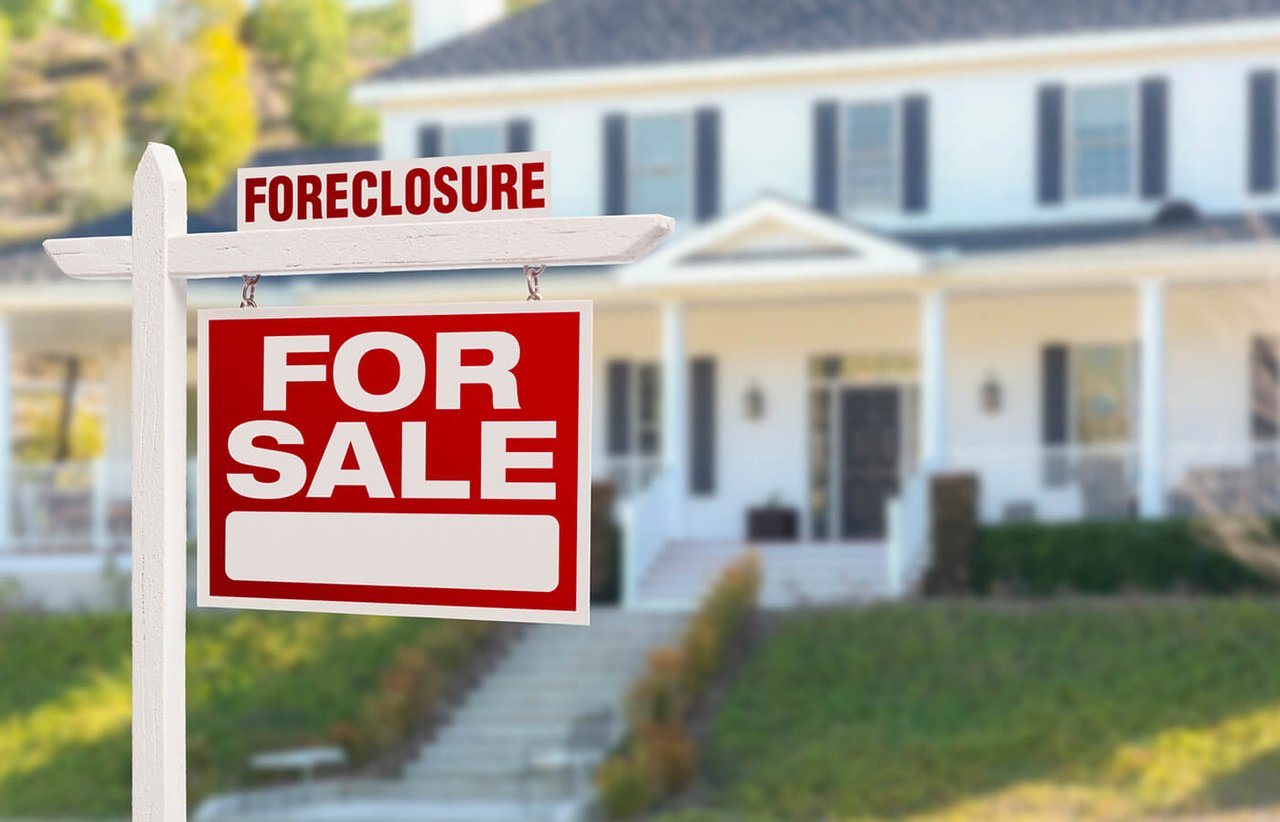
Foreclosure activity is increasing year-over-year
-
Mortgage rates are hovering around the low-6% range, and many borrowers are watching ARM reset periods
The big question for homeowners and sellers on Long Island is simple:
Does this change the direction of home values in Nassau and Suffolk—and should you sell now, wait, or hold?
Let’s walk through the newest numbers and translate them into real, local implications for the Long Island housing market.
1) Credit Card Debt in America: The Headline Number (and why it matters)
The Federal Reserve Bank of New York’s latest Household Debt & Credit report shows:
-
U.S. credit card balances hit $1.28 trillion in Q4 2025, increasing by $44 billion in the quarter.
-
Total household debt reached $18.8 trillion in Q4 2025.
Why this matters for housing (without overreacting)
Credit card debt doesn’t automatically mean “housing crash,” but it’s a stress indicator:
-
When revolving debt rises, households often become more payment-sensitive.
-
Payment sensitivity can reduce buyer demand, especially in higher-cost markets.
-
If job growth slows or household budgets tighten, the market typically shifts from “emotion-driven” to “math-driven.”
That said, the same NY Fed update emphasized that while credit issues ticked up, mortgage performance remained historically solid overall—just with warning signs concentrated among more vulnerable groups and places.
Translation for Long Island sellers:
Demand doesn’t disappear overnight—but buyers become more selective, more inspection-focused, and more “price-to-condition” oriented.

2) Foreclosure Rates: What’s Actually Rising (U.S. + New York)
Foreclosure headlines can be misleading because people confuse:
-
Filings (notices, auctions scheduled, repossessions)
with -
Completed foreclosures (REO)
and -
Foreclosure starts (when the process begins)
United States (January 2026 – ATTOM)
ATTOM’s January 2026 report shows:
-
40,534 U.S. properties had a foreclosure filing in January 2026
-
That’s up 32% year-over-year (but down month-over-month)
-
1 in every 3,547 housing units had a foreclosure filing in January
-
Foreclosure starts were 26,369, up 26% YoY
New York State (January 2026 – ATTOM)
New York was also highlighted as one of the states with the most foreclosure starts in January:
-
New York foreclosure starts: 1,304 (January 2026)
-
ATTOM also publishes January 2026 state-level rate tables and activity totals for NY.
What about Long Island foreclosures (Nassau + Suffolk)?
County-level foreclosure detail is often locked behind paid datasets, and the “free” versions can be inconsistent. What we can say confidently from the public trendlines:
-
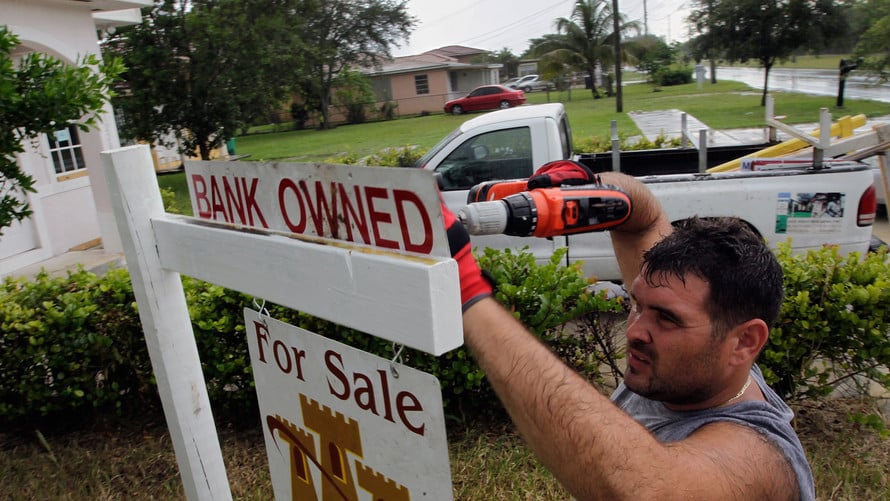
Foreclosure activity is normalizing higher versus the unusually low post-pandemic period (nationally and in NY), but distressed sales still remain a small share of total sales in recent national reporting.
Translation for Long Island:
Even if foreclosure activity rises, Long Island pricing is often more influenced by inventory and buyer depth than by a sudden flood of distressed homes—especially in high-demand school districts and commuter-friendly locations.
3) Interest Rates, ARM Resets, and What Happens Next
Where mortgage rates are right now (early 2026)
Freddie Mac’s Primary Mortgage Market Survey (PMMS) shows:
-
30-year fixed averaged 6.09% as of Feb 12, 2026
So we’re sitting in a world where:
-
Rates are not “cheap” compared to 2020–2021,
-
But they’re meaningfully below the 7%+ levels many buyers were bracing for.
Do ARM resets push interest rates higher?
A common misconception: ARM resets don’t “set” interest rates.
Most ARMs reset based on an index (often SOFR) plus a margin, subject to caps. That means ARM resets are more like a stress test for borrowers than a driver of the overall market rate.
What ARM resets can do:
-
Increase the number of homeowners who consider selling if payments jump
-
Increase refinance attempts (if savings exist)
-
Add some listing supply in pockets where ARMs were more common
But what drives overall rate levels is broader macro: inflation, jobs, and Treasury yields.
The Fed’s projected path (policy rates)
The Federal Reserve’s Dec 10, 2025 projections show a median expectation for the federal funds rate around:
-
3.4% by end of 2026
-
3.1% by end of 2027
-
3.1% by end of 2028
That doesn’t automatically equal mortgage rates, but it supports the idea that we’re likely in a “mid-6% mortgage world,” not a quick return to 3–4%.
Mortgage rate forecasts (what the big players expect)
Two commonly cited forecasts:
-
Fannie Mae (Jan 2026 Housing Forecast): 30-year fixed around ~6.0% through 2026–2027
-
MBA (Nov 2025 forecast): closer to ~6.4% in 2026–2027 and ~6.5% in 2028
Translation for sellers:
The market is likely to function in a rate range where buyers still buy—but they’re more sensitive to:
-
monthly payment,
-
taxes,
-
condition,
-
and price-to-value compared to comps.
4) Long Island Market Reality: Nassau and Suffolk Are Still Inventory-Constrained
Long Island doesn’t behave like many parts of the country because supply here has remained tight. The best way to see that is through OneKey® MLS market reporting.
Nassau County snapshot (OneKey® MLS – Q4 2025, data as of Jan 8, 2026)
Key points from the Nassau County market report include:
-
A high median sales price for single-family homes (mid-$800Ks range in Q4 2025)
-
Inventory that remains limited, with months of supply still low relative to a balanced market
Suffolk County snapshot (OneKey® MLS – Q4 2025, data as of Jan 8, 2026)
Suffolk’s Q4 2025 report shows:
-
Single-family median sales price around $705,000 in Q4 2025
-
Average days on market for single-family listings around the high-40s range in Q4
-
Inventory counts and months of supply that remain tight overall (with variation by property type)
What tight inventory means in plain English
When inventory is low:
-
Prices don’t need more buyers to hold firm—they just need enough buyers.
-
Even cautious buyers still compete for:
-
well-located homes,
-
updated/turnkey homes,
-
correctly priced homes,
-
and homes with strong layout + mechanicals.
-
This is why national headlines can sound scary while Long Island remains relatively resilient.
5) So…What Happens Next? A 3-Year Housing Outlook (2026–2028)
No one gets a perfect forecast. But we can outline likely scenarios using the data we have.
Base case: “Steady, selective market”
This is the most likely path if:
-
rates stay roughly in the 6%–mid 6% band, and
-
the job market avoids a major shock.
What it looks like:
-
Price growth slows but doesn’t collapse—especially in inventory-starved pockets.
-
Days on market drifts higher than the frenzy years.
-
Buyers negotiate more based on condition.
-
Sellers who price aggressively “like 2021” sit longer.
This fits the broader national picture where sales have been sluggish and affordability remains the limiting factor, even as the market continues functioning.
Downside case: “More distress, more price cuts”
This becomes more likely if:
-
consumer debt stress spills into job losses,
-
delinquencies rise meaningfully,
-
and forced sales increase.
We are not “there” nationally yet, but the NY Fed has clearly pointed to rising stress in some groups/regions.
If that downside plays out, the first places to feel it are typically:
-
homes with deferred maintenance,
-
over-improved homes priced above the comp ceiling,
-
and segments where buyers require financing and are payment-constrained.
Upside case: “Rates ease, spring markets heat up again”
If mortgage rates trend closer to the low-6s (or slightly below) and inventory stays tight:
-
demand can return fast in Long Island’s “A” neighborhoods,
-
and pricing can stay surprisingly firm.
Remember: Nassau and Suffolk are not “build-it-easy” markets. Limited land, zoning realities, and high replacement costs keep a floor under many areas.
6) What Sellers Should Do With This Information (Action Plan)
If you’re thinking about selling on Long Island in 2026, here’s the practical approach that wins in this market:
1) Price for today’s payment, not yesterday’s headline price
Buyers don’t shop by purchase price—they shop by monthly cost:
-
mortgage payment
-
property taxes
-
insurance
-
utilities
-
HOA (if applicable)
The homes that move fastest are the ones where a buyer can say:
“Even with today’s rates, this still makes sense.”
2) Condition matters more when buyers are cautious
When consumers carry more debt and payments are higher, they avoid “unknowns.”
That means:
-
pre-inspections (when appropriate),
-
clean disclosures,
-
updated mechanicals highlighted clearly,
-
and making it easy to understand what’s been improved.
3) Market like inventory is tight (because it is)
Your listing should do what buyers can’t do on Zillow:
-
tell a story,
-
show lifestyle,
-
demonstrate value,
-
and reduce perceived risk.
Professional photography, strong description copy, floor plan clarity, and correct positioning are not “extras” anymore—they’re core strategy.
4) Use local data, not national fear
National foreclosure stats matter, but the Long Island market is strongly driven by:
-
local inventory,
-
local buyer demand,
-
and the “move-up / move-down” pipeline.
That’s why the smartest sellers focus on what’s happening in their zip code and school district, not just the national headline.